From scooters carrying oversized packages to trucks loaded beyond their limits, India’s roads face a growing challenge: the unsafe use of vehicles for loads they were never designed to carry.
When Jugaad Becomes a Road-Safety Concern
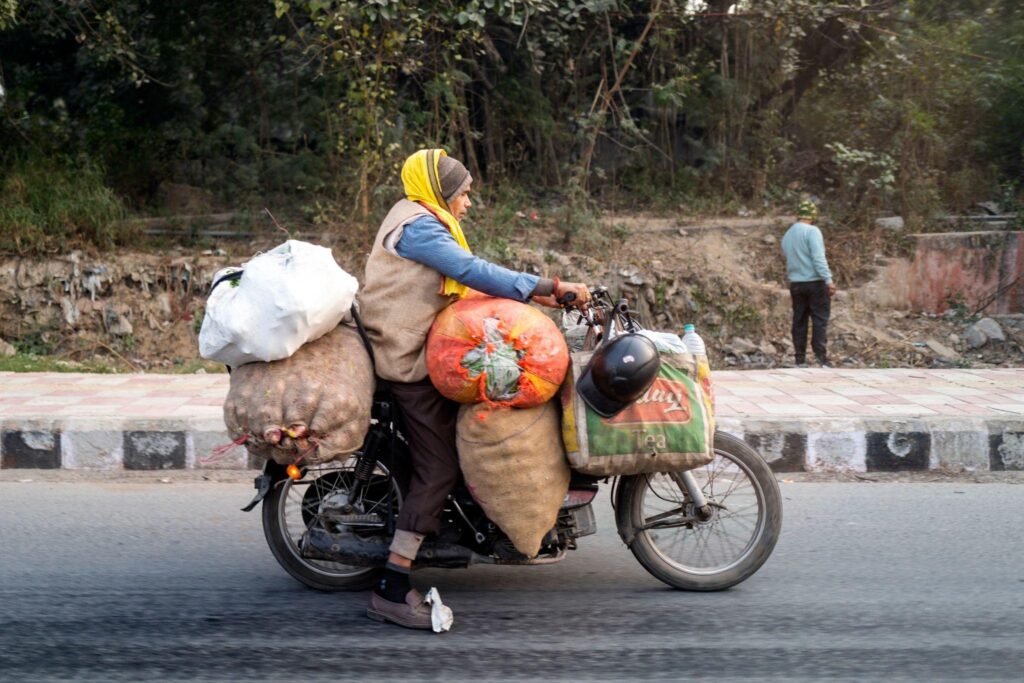
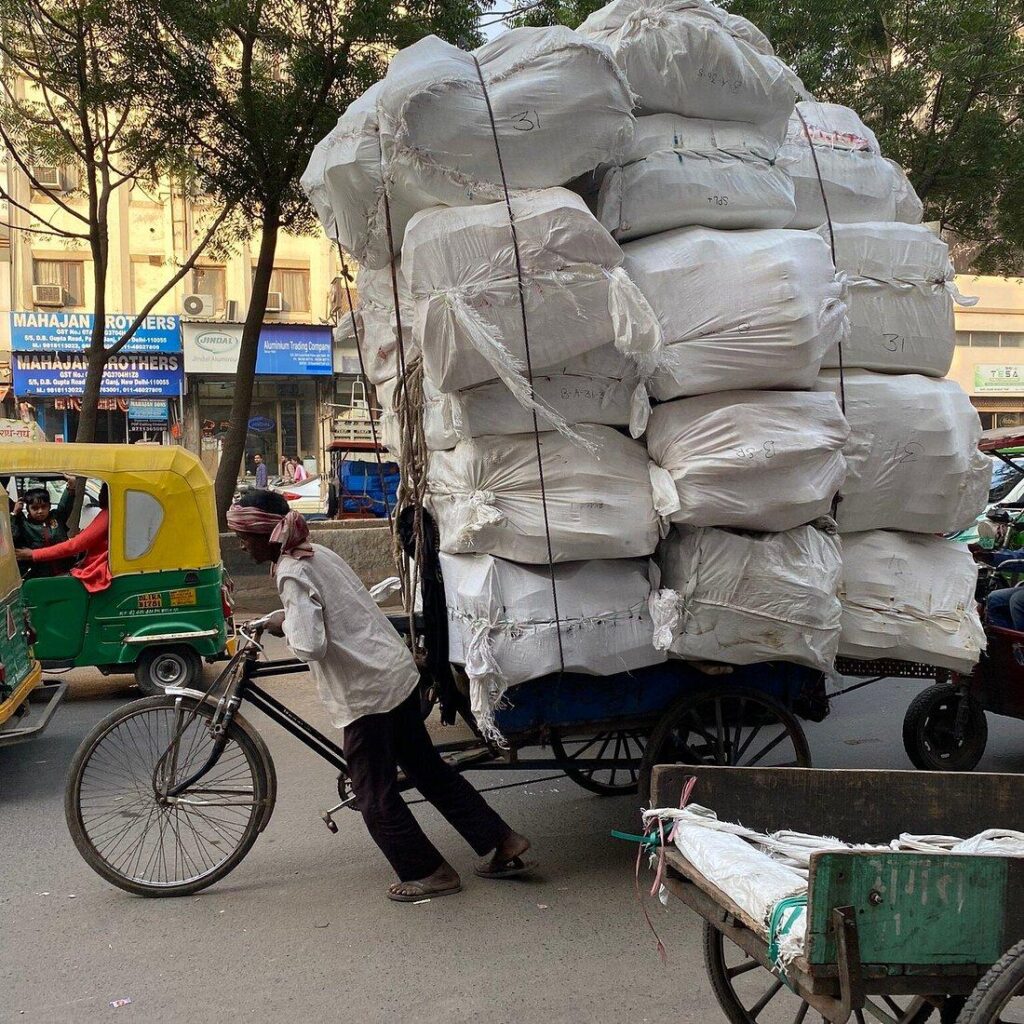
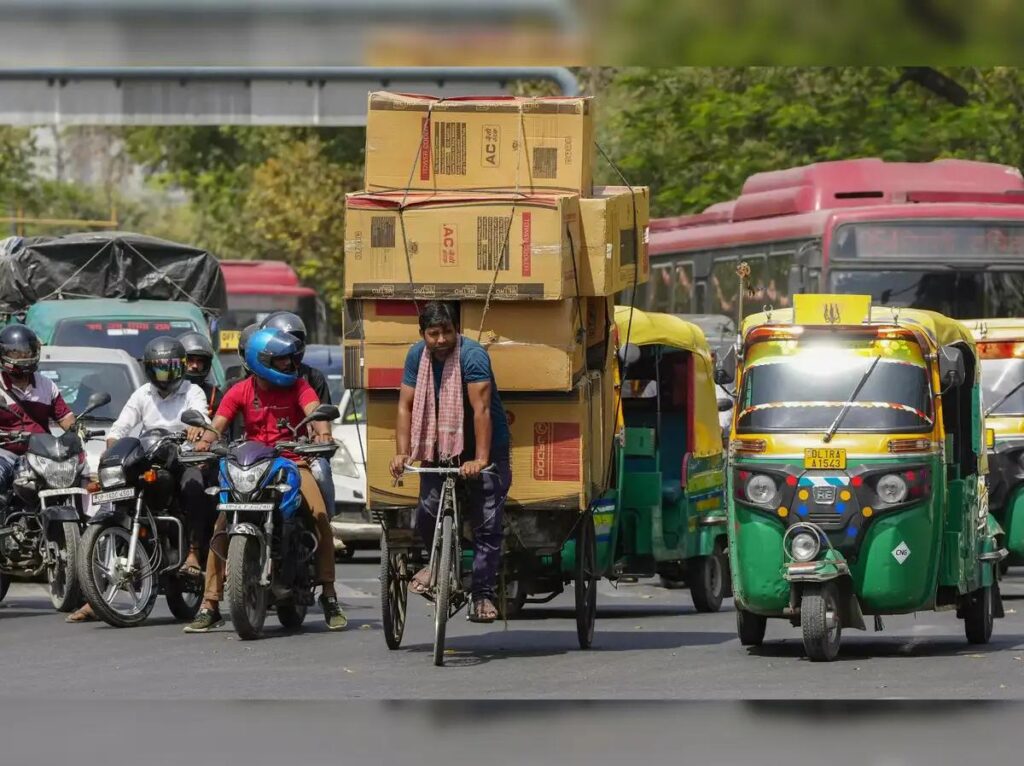
Walk through an Indian market, residential lane, or busy commercial road, and you will notice something that has almost become normal: a scooter carrying huge sacks, a bicycle loaded with cartons, an e-rickshaw packed with goods, or a truck carrying cargo far beyond its normal height.
What is often considered jugaad can become a serious road-safety and traffic-management problem when the vehicle, its load, and the surrounding road environment are no longer compatible.
The real question is not simply, “How much weight is being carried?”
The bigger question is:
Is this the right vehicle for carrying this particular load?
The Problem Is Bigger Than Weight
India has a vast informal transportation and delivery ecosystem. Small vehicles are affordable, flexible, and capable of entering narrow streets where larger commercial vehicles cannot operate.
For small businesses, vendors, and delivery workers, using whatever vehicle is available can also be an economic necessity.
However, the problem begins when a vehicle is used far beyond the purpose for which it was designed.
A bicycle carrying a small parcel is very different from a bicycle carrying several oversized sacks. Similarly, an e-rickshaw carrying passengers is different from one transporting bulky commercial goods.
These differences can affect balance, braking, visibility, and manoeuvrability.
A Scooter Is Not a Mini Truck
Scooters are designed primarily for personal transportation, with limited provision for additional luggage.
Yet it is common to see scooters carrying large boxes, sacks, pipes, furniture, and commercial packages extending from both sides of the vehicle.
An overloaded-scooter incident in Telangana even drew attention from the Telangana Police, highlighting the risks of putting one’s own life and the lives of others in danger.
The problem becomes particularly serious when the load affects steering, braking, or balance.
Just because a vehicle can physically carry something does not mean it can safely transport it.
Heavy machinery, large furniture, and oversized commercial packages should be transported using vehicles designed and authorised for such purposes.
Bicycles and Cycle-Rickshaws: Small Vehicles, Big Responsibilities
Bicycles and cycle-rickshaws play an important role in affordable last-mile transportation.
They are inexpensive, flexible, and particularly useful in congested areas and narrow streets. There is no reason to discourage their legitimate use for small deliveries and light goods.
The concern begins when a load becomes so large that the rider cannot maintain proper balance, visibility, or control.
The principle should be simple:
The load must remain within the safe operating capability of the vehicle.
E-Rickshaws: Convenient but Not Unlimited
E-rickshaws have become an important part of India’s urban transportation system. They provide affordable last-mile connectivity and can operate effectively on narrow roads.
However, they are sometimes used to transport large quantities of goods alongside passengers.
The question is not whether e-rickshaws should ever carry goods. They can have legitimate goods-transport applications.
The question is where the safety boundary should be.
Goods should not be stacked or attached in ways that compromise visibility, stability, passenger space, or vehicle control.
When an Auto-Rickshaw Becomes a Goods Carrier
Auto-rickshaws provide another striking example.
They are sometimes loaded with vegetables, sacks, boxes, and other commercial goods until the cargo occupies the passenger area and extends around the sides or roof.
For a small trader, this may appear to be an efficient way of moving goods.
But from a road-safety perspective, the important question is whether the load remains within the vehicle’s approved capacity and whether it affects the driver’s ability to operate the vehicle safely.
And Then There Are the Trucks
Overloading is obviously not limited to bicycles, scooters, and rickshaws.
Heavy commercial vehicles can also be loaded beyond permissible limits. A truck carrying an enormous quantity of sacks above its cargo body illustrates how excessive weight and height can create risks for the vehicle as well as other road users.
India already has regulations dealing with permissible vehicle weights and overloaded commercial vehicles.
However, the broader lesson is that overloading is both a weight problem and a vehicle-use problem.
Weight Is Not the Only Problem
When we talk about overloading, we usually think about kilograms.
But road safety is more complicated than simply calculating weight.
A relatively light object can become dangerous if it is extremely long, wide, tall, or poorly secured.
Imagine a scooter carrying a long metal pipe. The pipe might not be extremely heavy, but it could extend into the path of another vehicle or pedestrian.
Similarly, a tall stack of goods on an e-rickshaw can change its centre of gravity.
A sensible system should therefore consider:
- Weight and dimensions
- Stability and balance
- Visibility for the driver
- Braking and manoeuvrability
- Whether the load is properly secured
Overloading Also Adds to Traffic Chaos
Indian urban roads already have pedestrians, motorcycles, cars, buses, autos, e-rickshaws, delivery vehicles, street vendors, and parked vehicles competing for limited space.
An oversized load can make a small vehicle effectively wider or longer, forcing it to move more slowly or take additional clearance from surrounding traffic.
The result can be a chain reaction:
Less usable road space → Slower traffic → Difficult overtaking → Sudden braking → Additional obstruction
The issue is therefore not only the safety of the person carrying the load. It can affect everyone sharing the road.
The Solution: A Vehicle-Load Compatibility Rule
India could consider developing a clearer Vehicle-Load Compatibility System.
Instead of asking only whether a vehicle is registered and roadworthy, regulations could also specify what categories of goods that particular vehicle can safely transport.
For example:
| Vehicle | Appropriate Use |
|---|---|
| Bicycle | Small parcels and light goods |
| Cargo bicycle | Higher permitted cargo capacity |
| Scooter | Limited personal or delivery luggage |
| E-rickshaw | Defined passenger and cargo limits |
| Light goods vehicle | Medium commercial loads |
| Truck | Heavy or oversized commercial cargo |
The objective would not be to create unnecessary restrictions. It would be to establish a simple principle:
Small vehicle → Small load
Larger load → Appropriate goods vehicle
The exact limits should be based on manufacturer specifications, approved Gross Vehicle Weight, dimensions, braking capability, and applicable safety standards.
What About Small Vendors and Delivery Workers?
This is perhaps the most important part of the discussion.
Millions of people depend on inexpensive transportation for their livelihoods. A blanket ban on carrying goods on small vehicles could make transportation more expensive for small traders, vendors, and delivery workers.
Therefore, the objective should not be to eliminate small-scale transportation.
A person carrying a few lightweight packages on a scooter should not be treated in the same way as someone transporting heavy machinery on a scooter.
Regulation should distinguish between reasonable use and genuinely unsafe use.
Technology Could Make Enforcement Easier
Enforcement does not necessarily mean putting a traffic officer at every intersection.
India’s growing digital traffic infrastructure could eventually help identify obvious cases of oversized or improperly secured loads.
For example, traffic cameras could flag a two-wheeler carrying an unusually large object or an e-rickshaw with excessive roof cargo.
Importantly, technology should ideally flag vehicles for inspection rather than automatically penalising someone solely because an image appears unusual.
We Need Smarter Urban Logistics
The solution is not to remove bicycles, scooters, e-rickshaws, or cycle-rickshaws from Indian roads.
These vehicles are an important part of urban mobility and support millions of livelihoods.
Instead, India needs a better hierarchy of transportation:
- Small parcels → Small vehicles
- Medium commercial loads → Appropriate light goods vehicles
- Heavy machinery or oversized cargo → Appropriate commercial vehicles
This could make urban logistics safer without eliminating the affordability and flexibility that small vehicles provide.
From Jugaad to Safer Mobility
Jugaad reflects India’s creativity and ability to solve problems with limited resources.
That spirit should not disappear.
But there is a point where improvisation can create risks for the person making the journey as well as everyone around them.
The objective should not be to eliminate jugaad. The objective should be to make sure jugaad does not compromise public safety.
A bicycle delivering a parcel is reasonable. A scooter carrying a few bags is normal. An e-rickshaw transporting permitted goods can be useful.
But when a vehicle is effectively being converted into a truck through excessive loading, we need to ask whether there is a safer alternative.
The Question India Should Start Asking
For decades, traffic regulation has focused on questions such as:
Is the vehicle registered? Is it insured? Is the driver licensed? Is the vehicle roadworthy?
Perhaps we should add another question:
“Is this vehicle appropriate for what it is carrying?”
A perfectly roadworthy scooter can become unsafe when it carries an oversized machine. A perfectly functional bicycle can become difficult to control when its load affects balance and visibility. And a legitimate e-rickshaw can become a hazard when it is loaded far beyond its intended use.
Right Vehicle + Right Load + Right Limits = Safer Roads
India does not necessarily need fewer small vehicles.
It needs smarter use of the vehicles it already has.
And perhaps the most important change would be simple:
Stop treating every vehicle as a substitute for a truck.